
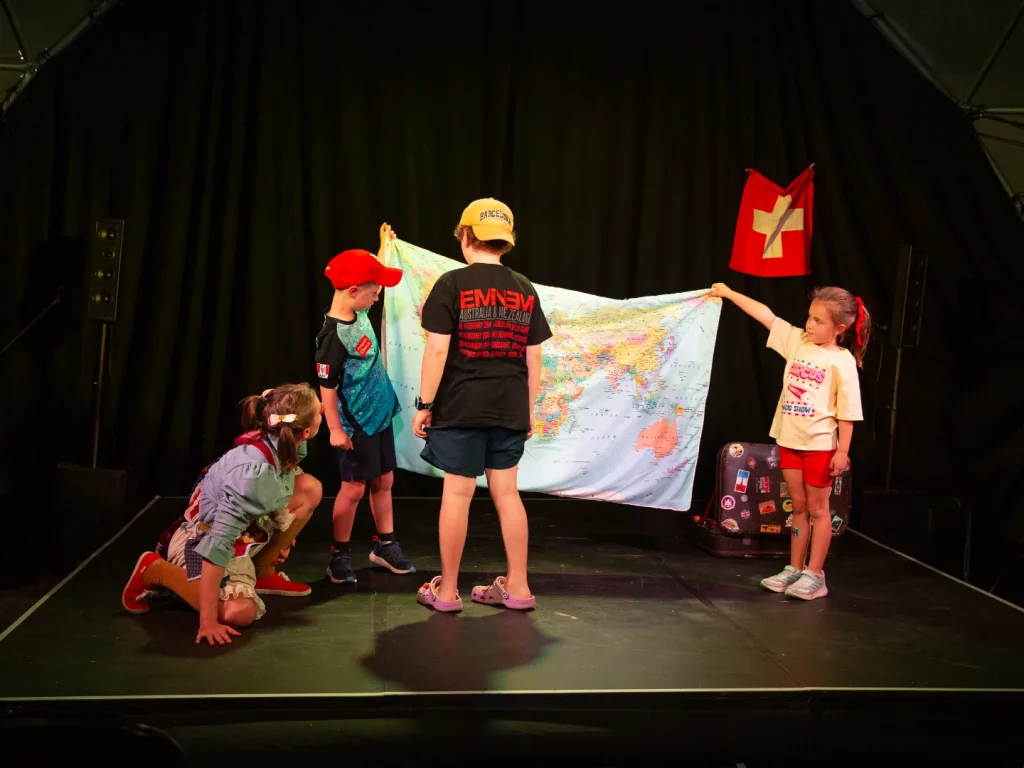
“Emotional intelligence” is a massive buzzword in Australian education right now. But if you look at how it’s typically taught, it usually involves structured reflection, behavioural programs, or filling out worksheets at a desk.
Let’s be honest: you can’t fill out a worksheet to learn how to handle anxiety, and a piece of paper won’t teach a child how to bounce back from failure.
As a Sydney-based multilingual actress and clown, I am a passionate advocate for non-formal learning—structured, intentional learning that happens outside the traditional formal framework and relies on real-life application. Through my work creating educational clown shows and running educational theatre workshops for schools and improv, I’ve seen firsthand how the chaotic, failure-friendly nature of drama can unlock a child’s emotional development far faster than any textbook.
Here is what stepping into the world of improv and clowning really teaches our kids about confidence, boundaries, and the freedom to be themselves.
The Power of the Red Nose: Escaping Social Pressure
In a standard school environment, children face immense social pressure to fit in, perform, achieve, and be accepted. Unfortunately, this constant need to “get it right” often causes them to suppress their true emotional expressions and needs.
Clowning completely flips that dynamic.
“Being a clown is an emotional state of being,” I always say. “The moment the clown enters the stage, they first arrive, perceive the space, and become fully aware of themselves within it.”
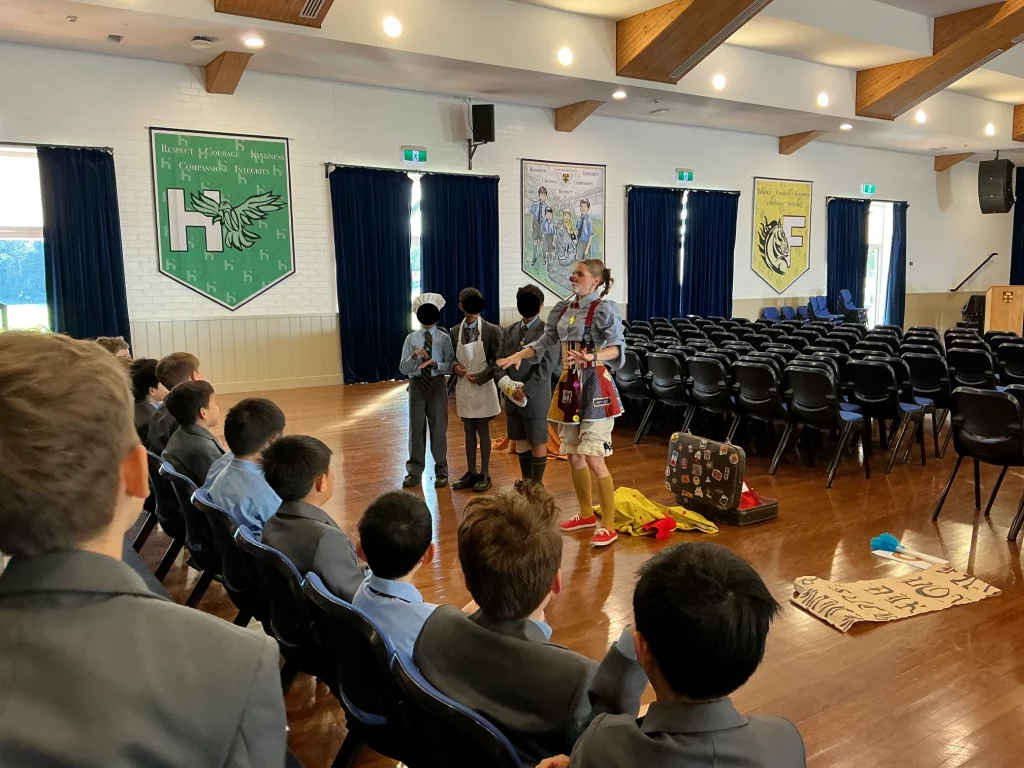
Through improvised character work, students are handed a rare, beautiful licence to express themselves emotionally without a shred of judgement. They are encouraged to embrace failure, to play, and to connect with their authentic selves. When failure is treated as a fun plot point rather than a bad grade, the fear of looking foolish completely evaporates.
The Spotlight Breakthrough: From Silent to Standout
The most rewarding part of running these workshops is watching the quietest kids realise their own power. During one of my school incursions, we were running an improv game with a group of primary school students.
One particular girl in the class was famously shy, deeply reserved, and usually just very quiet and well-behaved. But as the workshop progressed and the safety of the playful environment took over, she stepped up for an exercise and unexpectedly created a wonderfully funny, brilliant clown moment.
The shift in the room was electric. All the other children—including the kids who usually struggled to pay attention—were instantly drawn to her focus and presence. After the exercise, her classmates were literally pointing at her in awe, saying, “You’re the best and funniest clown!” . We were all genuinely surprised. This level of unshakeable playfulness and confidence wasn’t something anyone had anticipated from her, but the improv framework gave her the exact stage she needed to break out of her shell.
Managing the Chaos: Creative Freedom vs. School Boundaries
Of course, playing with raw silliness can get chaotic, especially with younger kids aged 6 to 10. They have a natural openness to expressing themselves in wild ways, but the real trick of running educational theatre workshops for schools and improv is finding the middle ground.
Sometimes, kids get so excited that they overstep. They might start making high-pitched noises for minutes on end or running wild around the room, which quickly derails the learning environment.
To keep the focus sharp without crushing their spirit, I rely on a few key strategies:
- Establishing a clear performance space: I physically separate the “stage” from the audience seating. This simple boundary keeps them focused and minimises distractions.
- Modelling boundaries through character: By nature, a clown explores, plays freely, and turns anything into creative material. When I step into my clown role to demonstrate, I will follow impulses and expand into different areas of the room.
- The gentle reminder: Because kids love to imitate that total freedom, they can sometimes push it too far. When they do, I gently step out of character to remind them that we are still in a school environment and certain structures remain in place.
Pivoting Under Pressure: What Distracted Classes Taught Me
True expertise in education means knowing how to adapt when a lesson plan completely falls flat. I once ran a workshop with a particularly difficult class where quite a few students were disruptive, refusing to listen to instructions, and entirely checked out.
Instead of fighting them as a frustrated instructor, I stopped trying to be a teacher. I immediately pivoted, stepped into a theatrical character, and invited them directly into a story.
Suddenly, the dynamic shifted. Because I met them with play instead of authoritarian rules, the kids finally joined in. Together, we improvised and played out an entire narrative throughout the lesson while I stayed completely in character.
Over years of touring Sydney schools, this taught me a profound lesson about childhood psychology: children naturally want to test boundaries. They actually need a clear structure because it gives them a safe space. To gain confidence in their instructor, they have to push against those limits to see if they hold firm. When our structures and boundaries remain consistent and predictable, the classroom becomes a safe haven where true emotional growth can happen.
Bring Creative Resilience to Your School
Improv and clowning aren’t just about getting a laugh—they are about teaching kids how to navigate the unpredictable, high-stakes world they are growing up in.
- To learn more about my background as a Sydney performer and educator, visit my About page.
- Ready to bring an engaging language-driven performance to your students? Explore my Multilingual Theatre Shows & School Incursions in Sydney page.
- Want to unlock your students’ confidence and emotional intelligence through play? Book one of my interactive Theatre & Clown Workshops in Sydney.